Thinking about adding an ADU to your Escondido property but not sure where to start? You’re not alone. Many North County homeowners want extra space or rental income, yet the rules and costs can feel confusing. In this guide, you’ll get clear basics on ADU types, statewide rules that shape approvals, what to verify with the City of Escondido, realistic cost ranges, timelines, and simple ROI examples. Let’s dive in.
What is an ADU?
An accessory dwelling unit is a small, independent home on the same lot as your primary residence. Common types include:
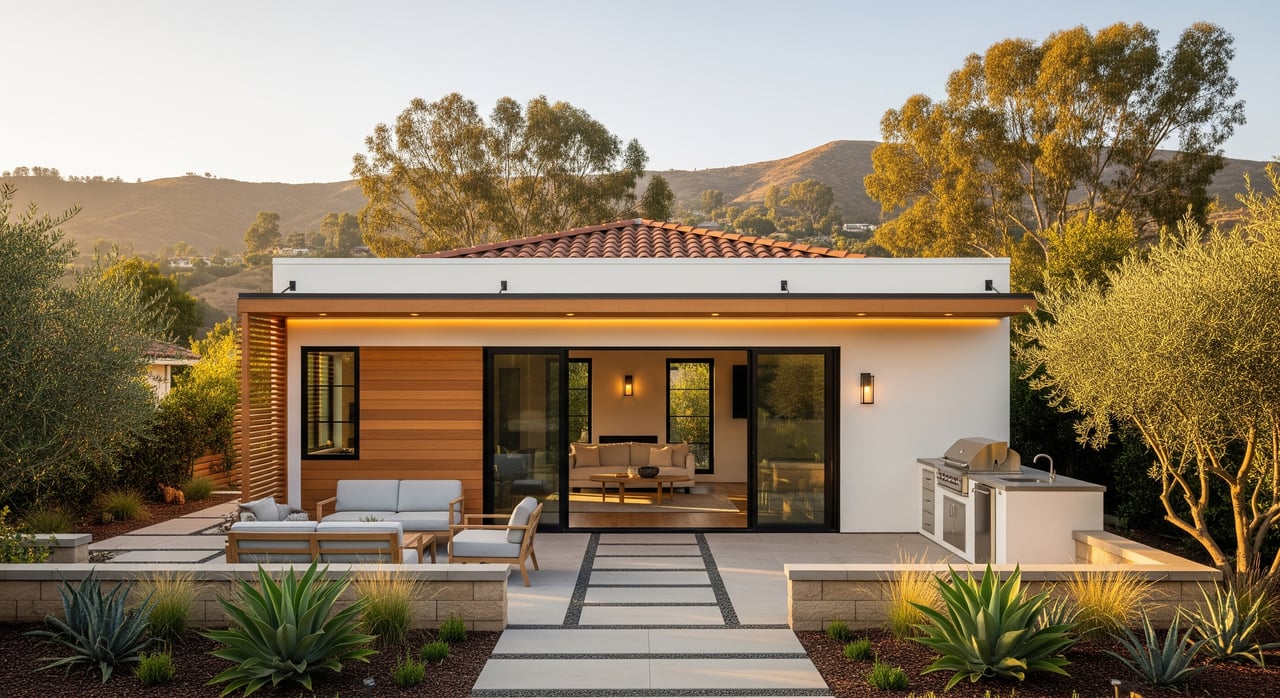
- Detached ADU. A separate backyard unit or a new build over a garage.
- Attached ADU. An addition that shares a wall with your existing home.
- Conversion ADU. A garage, basement, or other legal space converted to a dwelling.
- Junior ADU (JADU). A smaller unit carved from existing interior space, typically with its own entrance.
These options let you add living space for family, create rental income, or increase long-term property value.
California rules that help you
State law sets a strong baseline that local cities must follow.
- Size caps. State law allows ADUs up to 1,200 sq ft depending on configuration and local standards. JADUs are commonly limited to 500 sq ft.
- Setbacks and height. Many jurisdictions allow reduced side and rear setbacks, often about 4 feet for detached ADUs, subject to fire and safety rules and local objective standards.
- Parking. California limits when cities can require new parking, especially for conversion ADUs or homes near transit. Local practice still matters.
- Impact fees. ADUs under 750 sq ft are often exempt from impact fees. Larger ADUs can be charged proportionate fees.
- Approvals and timing. ADUs are approved ministerially, and many cities follow a 60‑day target to approve or deny a complete application.
- Owner‑occupancy and short‑term rentals. State reforms reduced owner‑occupancy requirements. Short‑term rental rules are governed locally.
Use this baseline as your starting point, then confirm details with the City of Escondido.
What to confirm in Escondido
Local rules can affect size, placement, design, timing, and fees. Before you draw plans, confirm the following with the City of Escondido Planning Division and Building Division:
- Allowed ADU types and local size caps for detached, attached, conversion, and JADU.
- Setbacks, height limits, lot coverage, and whether the city uses reduced side and rear setbacks for detached ADUs.
- Parking rules and exemptions, including how proximity to transit or conversions may affect requirements.
- Impact fees and utility connection charges, especially whether ADUs under 750 sq ft are exempt and what water, sewer, and storm drain fees apply by size.
- Ministerial approval process, what counts as a complete application, and typical plan‑check timelines.
- Owner‑occupancy and rental limits, including short‑term rental policies and any required registrations.
- Special overlays or hillside standards that change setbacks or design review triggers.
- Utility metering expectations, including separate meters for water, sewer, and electricity, and SDG&E service upgrades if needed.
- Fire and safety requirements from the Escondido Fire Department, such as access and sprinklers.
- HOA or CC&R limits that may restrict ADUs even when the city allows them.
ADU costs in Escondido
Actual costs vary by scope, site conditions, and finish level. Typical regional ranges include:
- Garage conversion: roughly $40,000 to $150,000+.
- JADU conversion: roughly $20,000 to $80,000+.
- Attached ADU: roughly $120,000 to $300,000+.
- Detached ADU: roughly $150,000 to $500,000+.
- Per‑square‑foot: about $200 to $500+ depending on site work, labor, and finishes.
Major cost drivers include new foundations and structural work, utility upgrades for sewer, water, and electrical service, site constraints like slope or retaining walls, local fees, and the kitchen and bath finish level you choose.
Timeline and approvals
A straightforward ADU can move quickly once your plans are complete, but it still takes planning and coordination.
- Pre‑planning and design: 2 to 8 weeks.
- Plan preparation by architect or engineer: 2 to 8 weeks.
- Plan check and ministerial approval: many cities target a decision within about 60 days of a complete submittal. With revisions, total plan‑check time often runs 2 to 4 months.
- Construction: 1 to 3 months for simple conversions. 4 to 8 months for most detached builds.
- Typical total timeline: about 6 to 12 months from design start to move‑in for owner‑led projects.
Common submittal items include a site plan showing structures, setbacks, and utilities; floor plans and elevations; energy compliance (Title 24); structural or civil engineering as needed; service plans for sewer and water; and any fire access documentation. Expect inspections for foundation, framing, trades, and final.
Parking, setbacks, utilities: practical tips
A few planning decisions early can save you time and money later.
- Parking. If your ADU is a conversion or near transit, parking requirements may be reduced under state rules. Local conditions like narrow lots or permit zones still matter, so confirm with the city.
- Setbacks and lot coverage. Many cities allow reduced side and rear setbacks for detached ADUs, often around 4 feet. Hillside lots or special overlays may change what is allowed.
- Utilities. Even when impact fees are reduced for smaller units, you may still need physical connection fees. Older homes often need an electrical panel upgrade, which requires SDG&E coordination. Ask whether separate meters are allowed or required.
- Fire and safety. Confirm fire access, defensible space, and sprinkler requirements with local fire officials.
- HOA/CCRs. If you are in an HOA, get written clarification on ADU allowances before you spend on plans.
Rental potential and ROI basics
Small rentals are often in demand in inland North County markets like Escondido. Returns depend on your cost, rent, financing, and ongoing expenses. Use conservative assumptions for vacancy and operating costs, and confirm actual rents with current local data.
Illustrative modeling examples:
- Scenario A. Garage conversion. Cost: $60,000. Rent: $1,600 per month. Gross annual rent: $19,200. Simple gross yield: 32%. Net yield will be much lower after expenses and vacancies.
- Scenario B. Small detached ADU. Cost: $220,000. Rent: $2,200 per month. Gross annual rent: $26,400. Simple gross yield: 12%. Financing terms will drive cash flow.
- Scenario C. JADU conversion. Cost: $35,000. Rent: $1,200 per month. Gross annual rent: $14,400. Simple gross yield: 41% before expenses.
For realistic planning, model a 5 to 10 percent vacancy rate and an operating expense factor between 30 and 50 percent of gross income. Discuss tax implications and depreciation with a qualified advisor, and remember that completed ADUs may increase assessed value and insurance needs.
Simple homeowner checklist
- Zoning and feasibility. Verify your parcel’s zoning and ADU allowances. Measure available space, note slopes and access, and check for any historic or special overlays.
- Talk to the city. Ask Planning and Building about size caps, setbacks, parking, fees for your ADU size, and the ministerial approval steps.
- Get ballpark quotes. Request two to three estimates from ADU‑experienced architects and contractors. Ask for line items on foundation, utility upgrades, connections, permits, and site work.
- Plan financing. Compare a HELOC, home‑equity loan, cash‑out refinance, or a construction loan. Ask lenders how they view ADUs in appraisals and underwriting.
- Review legal items. If you are in an HOA, confirm CC&Rs. Check the city’s short‑term rental rules. Confirm fire and utility requirements.
- Validate the market. Check comparable rental listings in your neighborhood and talk with a local property manager to ground your rent assumptions.
- Build the team. Choose a designer, contractor, and permit expediter as needed. Confirm who will handle Title 24, engineering, and inspections.
Ready to explore your ADU strategy?
Whether you want multigenerational space or long‑term rental income, a well‑planned ADU can add flexibility and value to your Escondido property. If you would like help weighing costs, timelines, and resale impact, schedule a free consultation with Gabriela Santiago. Se habla español.
FAQs
What sizes are allowed for ADUs in Escondido?
- California’s baseline allows ADUs up to 1,200 sq ft and JADUs commonly up to 500 sq ft, but you should confirm local caps and objective standards with the City of Escondido.
Do I need a parking space for my ADU?
- State rules limit parking requirements for certain ADUs, such as conversions or units near transit, yet Escondido’s local standards and site conditions will determine what applies to your property.
How much does a detached ADU cost locally?
- Regional ranges often run $150,000 to $500,000+ depending on size, site work, utility upgrades, and finish level; obtain multiple quotes for an Escondido‑specific estimate.
How long does permitting and construction take?
- Many cities target about 60 days to decide complete ADU applications, with total plan‑check often taking 2 to 4 months and construction taking 1 to 3 months for conversions or 4 to 8 months for detached builds.
Can I use my ADU as a short‑term rental?
- Short‑term rental rules are set locally, so confirm Escondido’s current policy and any registration requirements before planning a vacation rental use.
Will my ADU need separate utility meters?
- Policies vary by city and utility; ask Escondido and SDG&E about separate meters, required service upgrades, and any connection fees for water and sewer.